Solar Powered Fridges are Cutting Food Waste in Africa
In the US and Europe, people buy their fruits and veggies with the expectation that the produce is at its prime. That’s thanks to refrigeration in farms, trucks, stores, and homes.
In Africa, keeping produce fresh isn’t always easy, reported Euronews. Besides having to deal with extreme heat, droughts, poverty, and expensive fuel costs, the produce must be kept cool if it is to reach markets across the globe. Up to 40 percent of food produced in Africa is lost due to lack of refrigeration. But now solar powered fridges are helping to keep the produce fresh and marketable.
“You can do everything right on the farm, but if the produce is not stored properly, you lose both the product and income,” Kenyan farmer Yvonne Anyonyi Mumiah told Euronews. Her herbs are going to European supermarkets. Now she no longer needs to worry about her crops spoiling due to renewable energy.
Keeping Food Fresh Longer
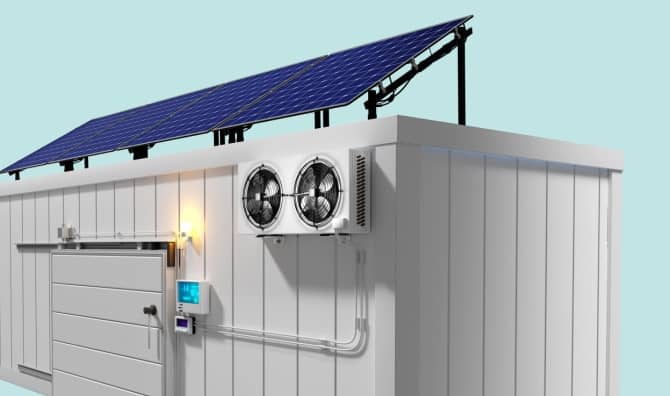
Solar-powered off-the-grid cold rooms and warehouses allow farmers to preserve perishable crops without having to depend on unreliable electric grids on the continent. One unit can be shared by multiple farmers who are able to rent space instead of purchasing the units.
Before solar cooling systems, farmers who lacked refrigeration had to sell their crops immediately after harvesting; resulting in economic losses.
“Cold storage remains one of the missing links in Africa’s agricultural value chains,” said Emmanuel Aziebor, regional director for Africa at CLASP, a nonprofit organization. “When farmers can store produce for longer, they gain access to better markets, reduce waste and increase incomes.”
Caroline Mukundi, a milk and egg vendor in Kenya, used to lose a lot of her stock when she sold in a Nairobi market because she had no way to keep the food fresh and could not afford refrigeration, reported VOA. The situation changed when she acquired a Koolboks solar-powered refrigerator.
Koolboks has sold 7,000 units on payment plans but many farmers cannot afford them. “We are looking at, for example, how businesses can be supported to get access to [the Koolboks refrigerators], especially for communities that are not able to afford [them],” Dorothy Otieno, program manager at the Center for Environmental Justice and Development, told VOA.
Environmental Benefits
The solar refrigerators have a positive environmental impact. Kenya has a high level of food waste, which ranges from 40 to 100 kilos per person. These high levels of organic waste increase greenhouse emissions and worsen climate change.
Traditional cold storage systems depended on diesel generators, according to Euronews. Using a renewable energy source like solar can reduce the consumption of fossil fuels and lower emissions.
Solar energy can power more than just cold rooms. Across Africa, farmers are using solar-powered irrigation systems that allow for year-round farming as well as solar milling machines and processing equipment.
While there are environmental benefits, solar technology is known more for economic benefits to small farmers and communities in Africa. Reducing food waste will allow farmers to have a higher standard of living and a better life.