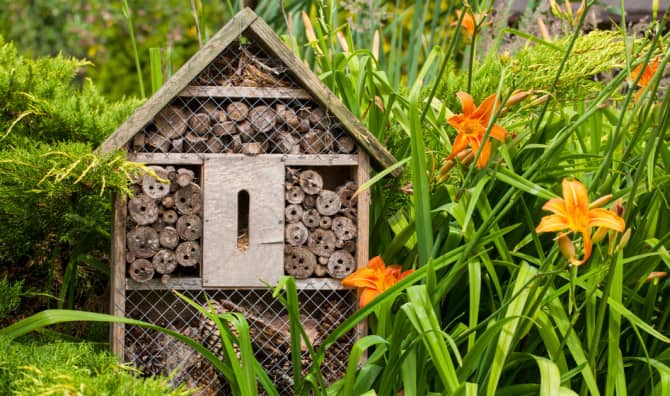
Offering Solitary Bees a Home in the Garden
Solitary bees are an important species, essential for pollinating many plants and crops. Although they may not make the sweet honey or beeswax that people love, they help your garden become abundantly blooming and fruitful. This spring, honor solitary bees by providing them with a home. These harmless, busy bees will thank you with blooms!
There are many species of solitary bee in the world, with the mason bee being the most common in the US, according to BeeKeepClub. It is smaller than the average honey bee and is metallic blue or blueish-black. The male does not even have a stinger, while the female will sting only if trapped. They are harmless, easy to keep and are efficient workers in the garden.
Since they do not like to roam further than 300 feet from their nest, they prefer to make their homes in gardens where plentiful flowers, fruit, and nut trees abound. If you have such a garden, invite them in by building a bee house.
How to make a bee hotel
Solitary bees like to make nests in hollow stems, so provide them with a selection of tunnels. These can be a collection of bamboo stems piled horizontally, as seen on Gardeners’ World. Gather items from the garden including twigs, old tiles, and logs with holes pre-drilled inside. Fill the gaps between the logs with hollow stems of fennel and sunflowers. The bees will feel right at home!
After finding a safe spot to lay her eggs, the female solitary bee will gather pollen for her eggs and then lay the egg inside a store of pollen, as detailed on The Wildlife Trusts. The bee then plugs up the cell and lays a few more eggs in a row. When the larvae emerge the following year, they will have food to eat.
Keep your bees in high style by planting foraging sites nearby, as recommended in the video. Patches of goldenrod, black-eyed Susan, bergamot, and yellow primrose are favorite hangouts for these bees. Providing a fresh water source is also important. Try to place your bee hotel at least three feet from the ground and protect the tunnels from birds by covering it with chicken wire.
As honeybees and solitary bees alike are under threat, it is important to honor them. But do not forget about the much overlooked solitary bee. When you offer these bees a special home, you are protecting fragile species as well as giving your garden the opportunity to host super-pollinator VIPs!